Rinse promptly
Fresh water removes salt crystals, sand, chlorine, and residue before they settle into seams, valves, coatings, and moving parts.
SeaMotion Field Guide
A considered care system for kayaks, paddle boards, snorkeling equipment, beach gear, flotation products, dry storage, and the equipment that keeps every waterside day moving.

The care standard
Most outdoor gear lasts longer when salt, sand, moisture, heat, and pressure are managed early. The goal is not complicated maintenance; it is a dependable routine performed at the right moment.
Fresh water removes salt crystals, sand, chlorine, and residue before they settle into seams, valves, coatings, and moving parts.
Airflow protects fabrics, straps, foam, storage compartments, and inflatable surfaces from trapped moisture and odor.
Avoid sharp folds, heavy stacking, direct sun, and constant pressure on fins, valves, buckles, or molded edges.
Check attachment points, inflation hardware, flotation closures, straps, tow ropes, racks, carts, and repair areas before every trip.

Fresh-water rinsing is especially important after coastal, river, and pool use.
Kayaks, boards & hard equipment
Recreational kayaks, canoes, paddle boards, fins, paddles, racks, carts, pumps, and repair tools should be rinsed after exposure to salt water, muddy water, chlorine, or fine sand. Pay particular attention to joints, handles, drainage areas, fin boxes, valve surrounds, buckles, and metal hardware.
Inflatable kayaks, boards & loungers
Inflatable equipment performs best when pressure, temperature, folding, and valve care are handled carefully. Heat can increase internal pressure, while cold conditions reduce it. Never leave a fully inflated item inside a hot vehicle or in direct sun for extended periods.

Broad folds and dry storage help preserve seams, coatings, and valve performance.
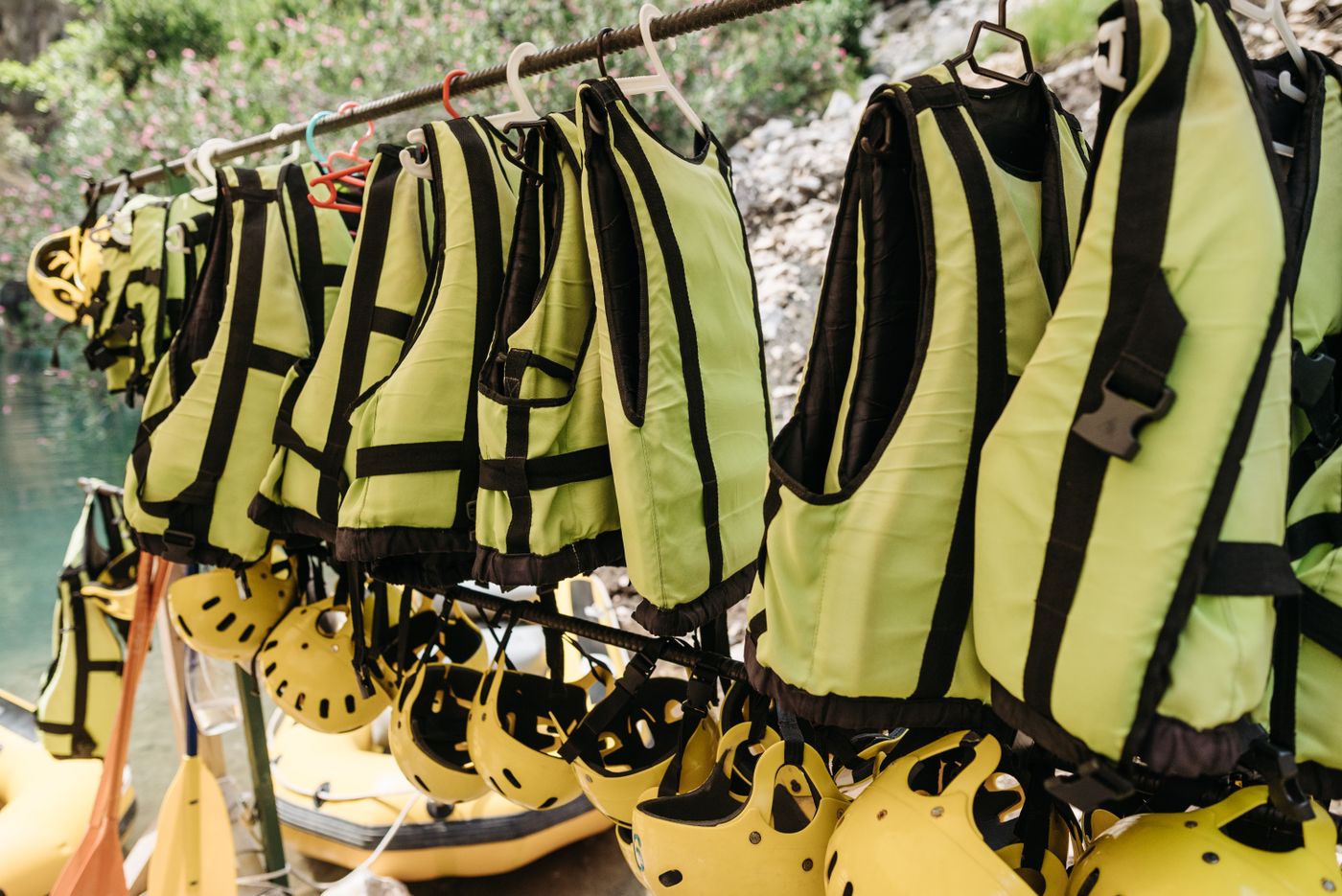
Shade drying protects color, stretch, foam, and protective finishes.
Life jackets, wetsuits & beach textiles
Life jackets, flotation gear, rash guards, wetsuits, water shoes, dry bags, towable covers, beach chairs, loungers, outdoor mats, canopies, and wind shelters all benefit from mild cleaning and patient drying.
Storage, transport & off-season care
Good storage protects shape, coatings, flotation materials, straps, seals, and accessories between trips. Choose a cool, dry area with controlled airflow and keep equipment away from fuel, oils, solvents, sharp tools, and pest activity.

Organized storage reduces pressure damage and makes pre-trip inspections faster.
A practical rhythm
A simple schedule keeps maintenance manageable and prevents small issues from becoming trip-ending failures.
Remove sand, salt, water, leaves, and loose debris. Open compartments and let every surface dry before packing.
Check flotation closures, leashes, tow ropes, fins, handles, valves, carts, racks, straps, and repair areas.
Clean seats, handles, water shoes, masks, snorkels, fins, dry bags, coolers, and frequently used storage accessories.
Deflate appropriate items, loosen straps, remove batteries where applicable, and store repair materials with matching equipment.
Final inspection
Use this final check after cleaning and again before departure. It covers the areas most likely to affect safety, setup time, comfort, and equipment life.